
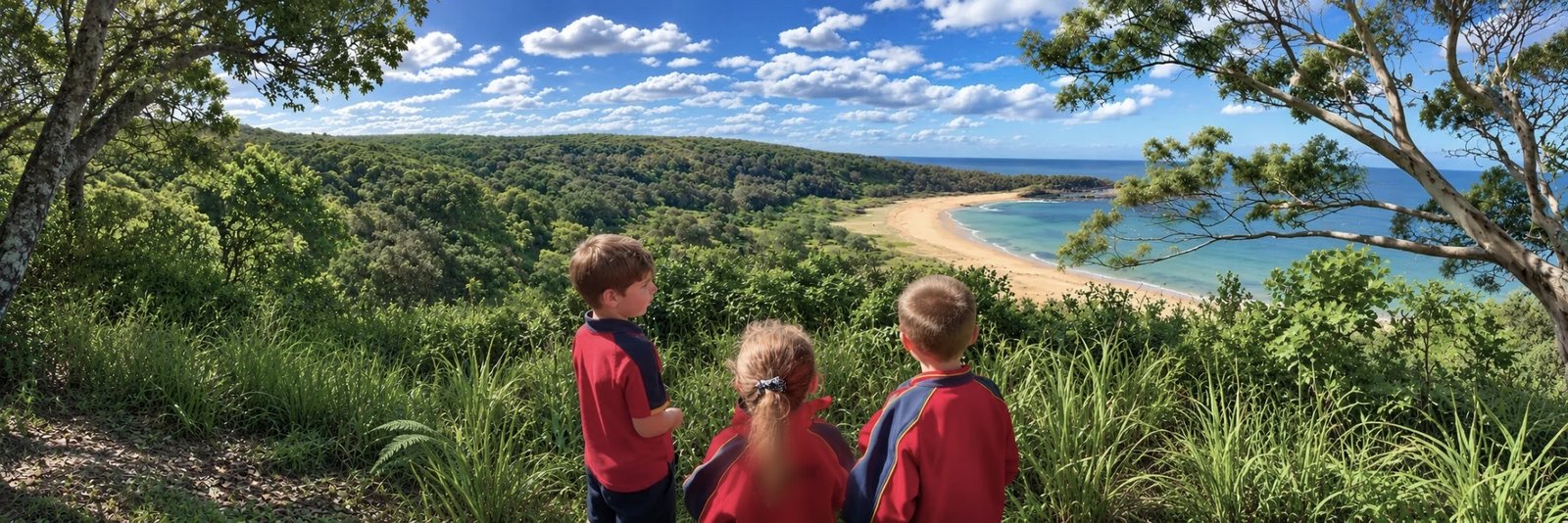
Keep the learning growing.
A bush tucker learning pilot connecting the school garden, classroom inquiry and an ongoing relationship with local Aboriginal partners.
Observe. Ask. Care for Country.
Students get to know one real plant at your school and keep coming back to it. They notice changes over time, separate what they saw from what they were told, and work out a way to care for it.
What a child and teacher would experience
An example Lomandra station, a learning page and a classroom discovery task.
MEET LOMANDRA
What do you notice about the leaves and flower spikes?
Plant information: Bush Tucka Tracka
Scan the sign or use the teacher link.
Lomandra
Look closely: Draw a leaf. What shape is it?
Care for Country: Leave the plant growing.
Keep investigating: Revisit and compare changes.
Student discovery
Date:
I notice:
My question:
What changed?
How can we care for it?
Teacher links and printable tasks provide alternatives to scanning.
A focused pilot over one school term
Recommended start: one Lomandra station, one teacher champion and one nominated cohort.
Agree + prepare
Confirm the school plant, site, access, community role and written scope.
Notice + question
Introduce the resource. Record a starting drawing and class question.
Compare + investigate
Revisit the plant, compare records and explore one inquiry question.
Reflect + review
Compare learning, gather teacher feedback and decide on continuation.
Before installation: approve content and attribution; choose and test the learning-page host and QR links; confirm device access and print fallback; agree production and mounting.
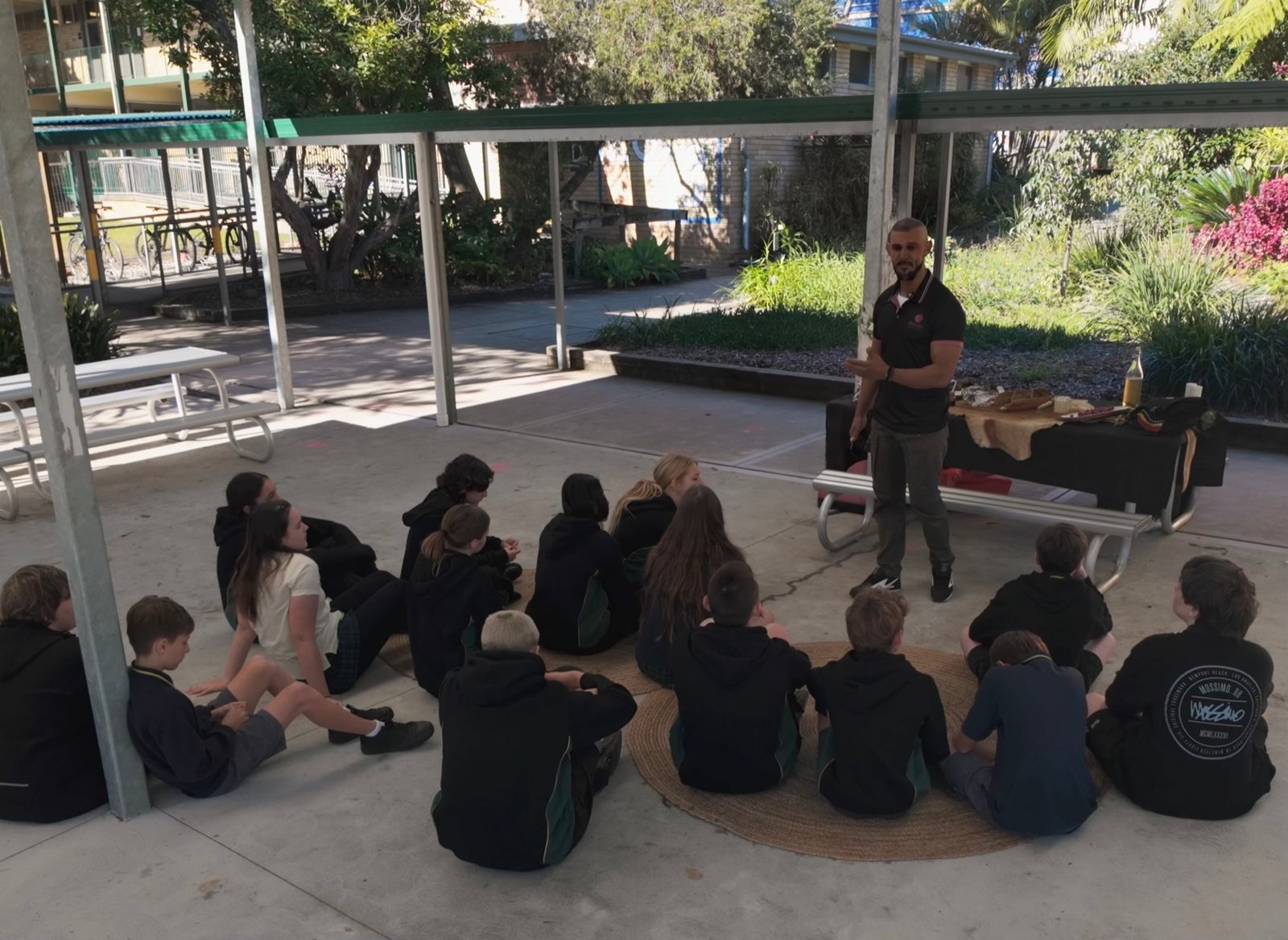
Community connection is part of the design
Roles are agreed together, with cultural contributions recognised.
SCHOOL + AEO
Select learning priorities, coordinate appropriate community involvement, guide teachers and review the pilot.
EVIS / BUSH TUCKA TRACKA
Prepare plant resources, QR artwork, teacher handover and agreed support. Plant-information source: Bush Tucka Tracka.
LOCAL ABORIGINAL PARTNER
Knowledge holders or a local organisation: approved contributions, a scoped exchange or a return visit, subject to agreement.
STUDENTS + TEACHERS
Observe, investigate and prepare selected class work to share back through teacher-mediated exchange.
SCHOOL + AEO
Select learning priorities, coordinate appropriate community involvement, guide teachers and review the pilot.
EVIS / BUSH TUCKA TRACKA
Prepare plant resources, QR artwork, teacher handover and agreed support. Plant-information source: Bush Tucka Tracka.
STUDENTS + TEACHERS
Observe, investigate and prepare selected class work to share back through teacher-mediated exchange.
LOCAL ABORIGINAL PARTNER
Knowledge holders or a local organisation: approved contributions, a scoped exchange or a return visit, subject to agreement.
How we look after culture and students
- Local stories and language are used only with permission and credit.
- How knowledge holders are involved, and how their time is recognised, is agreed with them first.
- Aboriginal and Torres Strait Islander students are never asked to speak for their culture. They are welcome to share if they choose.
- Students don't need phones, accounts or the app.
- Tasting is not part of this learning.
A garden for every season
Learning can refresh around the same plant across the year.
OBSERVE
Draw the plant now. What do we notice?
COMPARE
Revisit leaves, flowers or seeds. What changed?
MANY QUESTIONS
SHARE + RETURN
Explain learning and set a new question. What shall we revisit?
CARE
Consider a practical care action. What does our evidence show?
MANY QUESTIONS
OBSERVE
Draw the plant now. What do we notice?
COMPARE
Revisit leaves, flowers or seeds. What changed?
CARE
Consider a practical care action. What does our evidence show?
SHARE + RETURN
Explain learning and set a new question. What shall we revisit?
Meet Lomandra
Our sample first plant is Lomandra longifolia, spiny-headed mat-rush. Sample teacher notes include a term plan, return visit prompts and proposed links to the NSW K-6 syllabuses for your review.
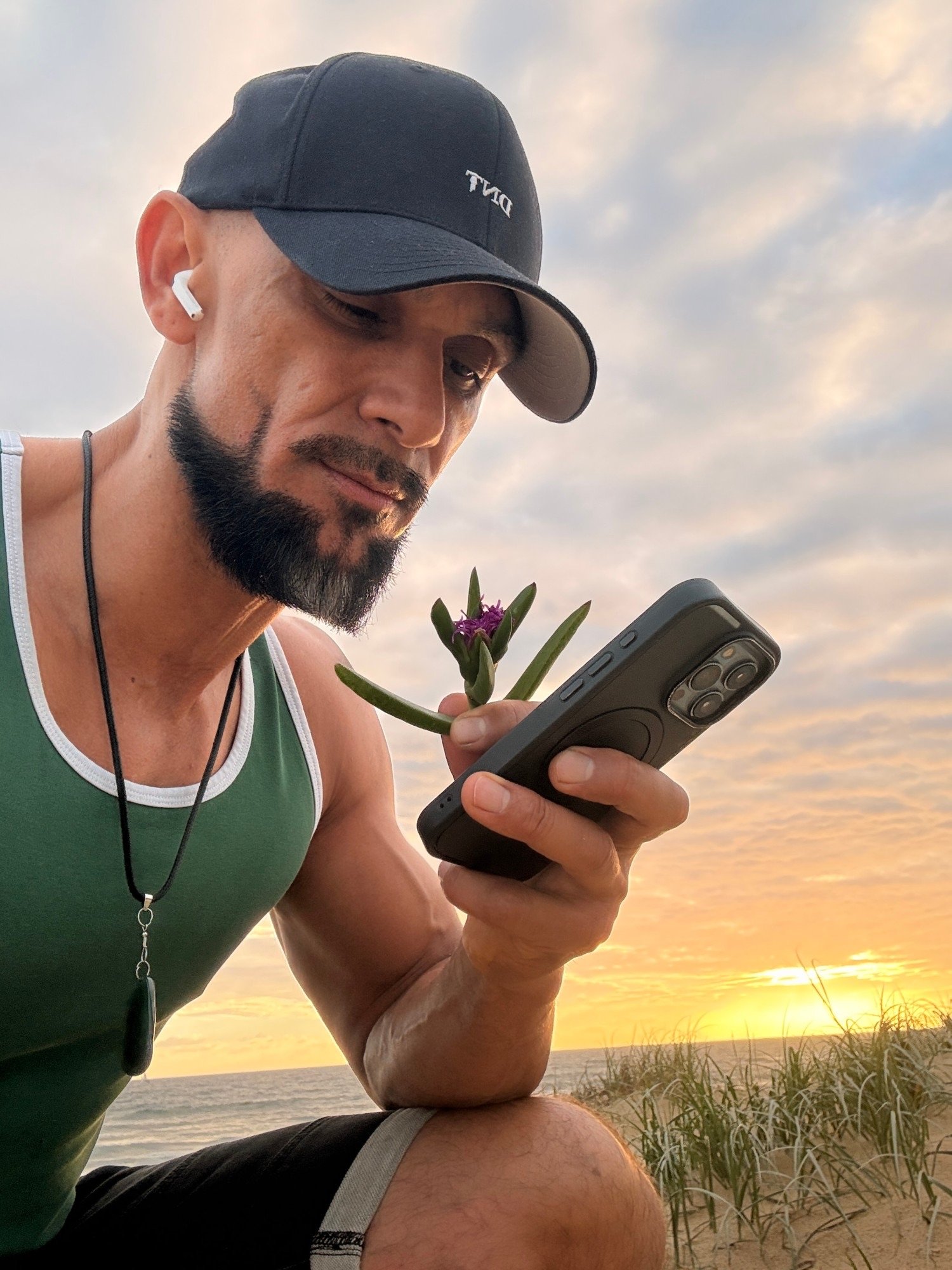
Let's have a yarn
Tell us about your school and what's growing there. We'll work out together whether this is a good fit.
Yarn with usThis program supports classroom learning, not independent foraging.